|
Duration: c. 13'
DETAILS
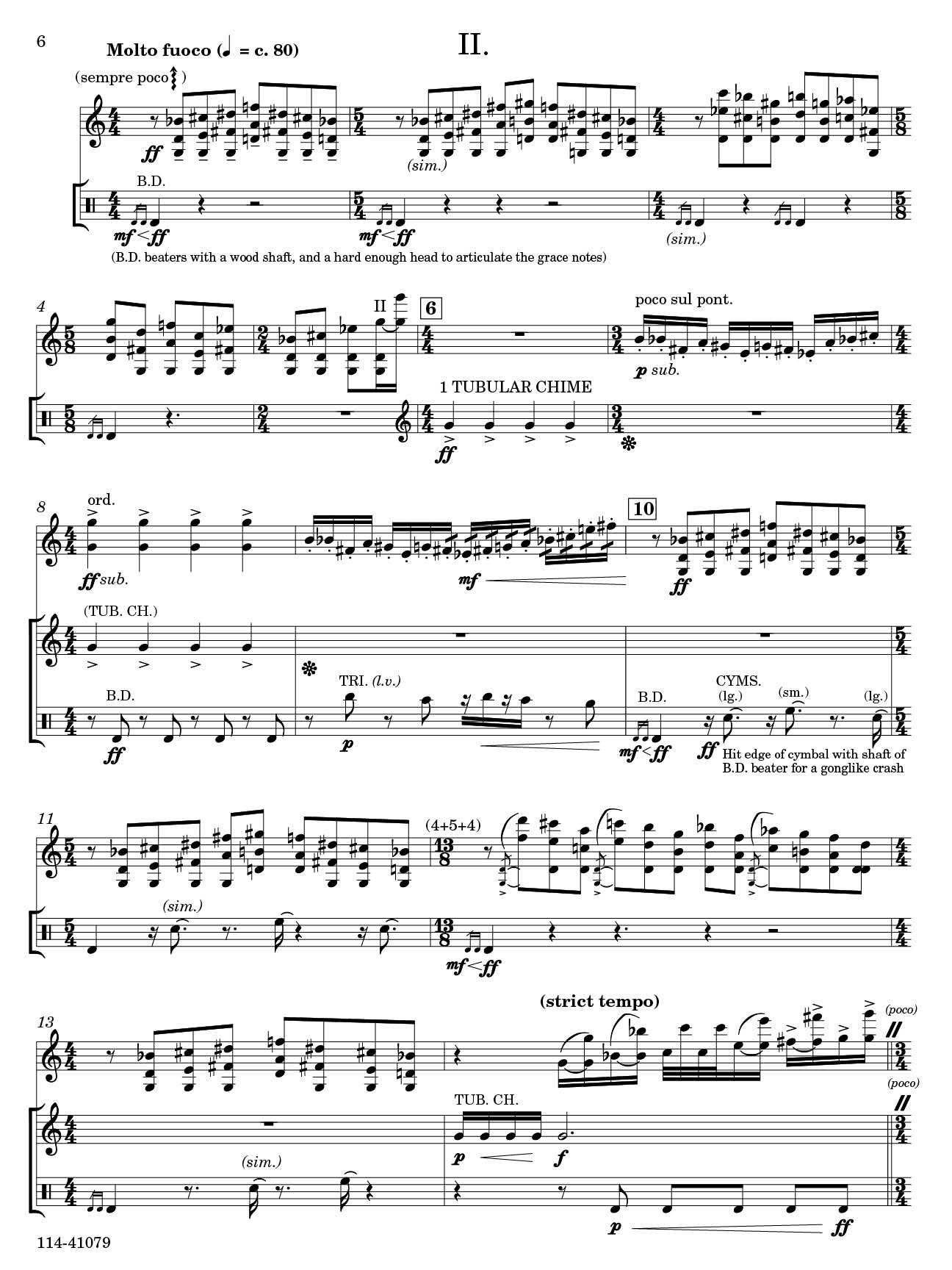
PREMIERED by Terry Vermillion (perc) and Marion Judish (vn), St. Cloud, MN.,
February 2000.
HEAR AUDIO EXCERPTS from the
premiere:
from Mvt. 1,
from Mvt. 2,
from
Mvt. 3
BUY from your favorite sheet music dealer, or direct from Presser.
PROGRAM NOTES
THREE MYSTERIES OF NAGASAKI was inspired by the ambiguous bells of the oldest Western church in Japan.
In an island nation that used to thrive on isolation from the rest of the world, Nagasaki has long been a vulnerable exception. From the 16th through 19th centuries, it was Japan’s only international port, open to Portuguese and Dutch traders. From this sole crossroads, Christianity (along with European food, flowers, and language) began flowing into the otherwise insular culture. The US Navy’s presence in the 1800s added to Nagasaki being Japan’s exposed Achilles’ heel, which may be why Puccini’s Madama Butterfly is set in this city, with Cho-Cho-San’s vulnerability symbolizing the risk of openness to Western influence.
I’ve had occasion to visit Nagasaki, and have never felt so haunted. Aside from the unspeakable atrocity of 1945 and the lasting presence of that horror, there also remains a mysterious air of not really being in pure Japan, or in the present day. Nowhere was this more obvious than within the Ōura Basilica, the earliest Christian church built in Japan. Decades after visiting the basilica, I still recall its oddly distorted and slowly pealing bells, and timeless incense floating in relative darkness. The mysterious bells have stayed with me both for their own sonority, and as a subconscious reminder of everything Nagasaki is and was.
Composed for a violinist-percussionist couple who ended a decades-long relationship just as I completed the work (and never performing it), it was originally called simply THREE MYSTERIES; I couldn’t make a direct reference in the title because it felt too raw. Looking back years later, the updated title THREE MYSTERIES OF NAGASAKI seems to ask more questions than it answers.
REVIEWS
"The sentiment behind the genesis of the piece, and the pairing of both unpitched and pitched metallics with a string instrument, is intriguing. The sections that weave the vibraphone along with the unpitched instruments, with the violin are, ... quite lovely.... For an advanced graduate student or professional looking for a percussion and violin pairing outside of the common marimba/violin fare, this piece would make an interesting addition to a recital."
–
Percussive Notes (Marilyn K. Clark Silva), September 2018
|
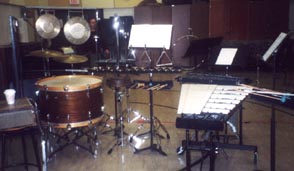 Terry Vermillion's set-up for the
premiere Terry Vermillion's set-up for the
premiere |