Music by DANIEL DORFF |
 |
|
Q&A WITH DANIEL DORFF Barbara Siesel, August 2016 (The Flute View)
|
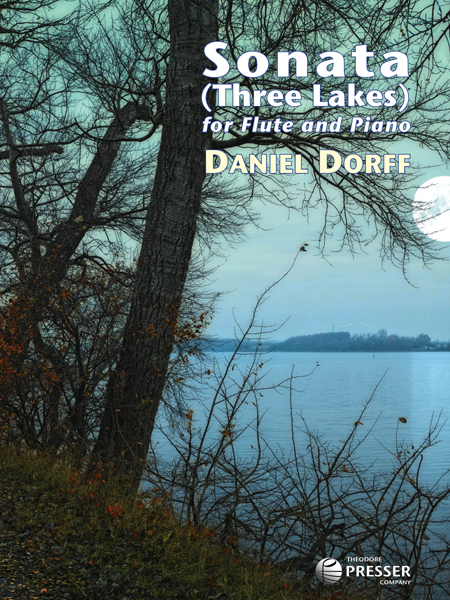
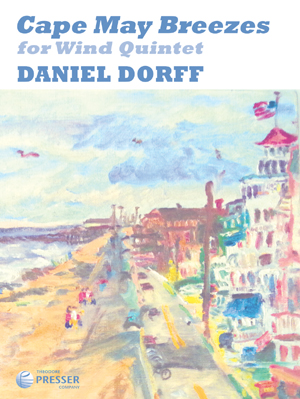
| Please tell us about yourself -- your education, how you got into music and composing, current work etc. This desire to create music that people want to perform and hear was way out of step for academic training in the 1970s. I was often told that to express myself properly as a composer, I must write atonal expressionism because that’s the only valid style, and I’ve never understood this attitude. I’m writing to express myself, not someone else’s self. I was even accused by one professor of being honest in my writing, as if that was a flaw. Despite the flak from other composers, performers were very interested in my music, and I did love my schooling at Cornell and University of Pennsylvania. I had the opportunity to study with wonderful composers and the self-confidence to know that all creative artists are subjective, and that I could learn a lot from these older masters who didn’t like my aesthetics. After finishing grad school at UPenn, I began free-lance proofreading at nearby Theodore Presser Company, considering that as temp work until I got a teaching job. I didn’t realize their editor-in-chief was about to retire, and that he sensed my zeal for producing sheet music and was grooming me as his replacement. I hadn’t considered sheet music editing and production as a possible career path, but it fits me perfectly. I’ve been full-time at Presser for over 30 years, and it truly still feels fresh every day because there’s always new music coming in to work on. You've composed many wonderful works for flute (and piccolo), how did you get interested in writing for flute? The more recent wave of flute music came later from representing Presser at NFA conventions in my role as publisher for Schocker, Liebermann, Baxtresser, and many other wonderful composers and teachers. Making friends with flutists at conventions led to some commissions and performances, and I’m incredibly fortunate and grateful that these continue to spawn more performances and commissions. Of course this goes hand-in-hand with my love of the flute as a vehicle for my musical ideas! Flute is inspiringly natural as a manifestation of a composer’s breath and voice, all the nimble agility one could ask for, and a wide range of colors and sizes. How could I not love writing flute music?! There are several articles about my woodwind music at www.danieldorff.com/interviews.htm that go into this more deeply. Congratulations on your 60th birthday concert which will be performed at the NFA convention on Thursday at 9am. What pieces will be performed and who will be performing? What is the genesis of this concert? Since Cindy is from San Diego, her ensembles are right there to play at the convention. Her wind quintet, The WindSong Consort, will give the first NFA performance of Cape May Breezes, a 19-minute suite inspired by the quaint town at the bottom tip of New Jersey. Following the quintet, Patricia Surman will perform Sonata (Three Lakes) which she’s just released on Centaur Records. Then Flûtes de Salon (Cindy Anne Broz, Ruth Mayhew Washington, Cathy Blickenstaff, Tracy Goodwin) will give the first NFA performance of It Takes Four to Tango, and end the concert with The Year of the Rabbit. You have written a tremendous body of music dedicated to orchestral music for children, can you tell us about some of these pieces? What motivated you to write for children? Word gets around, and that led to a commission from the Sacramento Symphony to write a narrated guide to the instruments, specifically designed to keep American 8-year-olds engaged through a story, unlike the lecture-format of the Britten guide’s narration. My approach is always to keep the kids, parents, and musicians entertained all at their own levels, like the old cartoons we grew up on without realizing how much there was for the grownups too. The Minnesota Orchestra’s education department commissioned two pieces, one on Aesop fables, and another on Goldilocks, and the Philadelphia Orchestra has commissioned many narrated chamber pieces for their youngest listeners. While they all have music education objectives like contrast or variations, the real goal is for the next generation to like classical music because it’s fun to hear, and to foster their enthusiasm. There are some interesting articles and audio clips at www.danieldorff.com/narratedworks.htm and many of these are also on youtube. You are also VP of publishing for Theodore Presser Company, how do you balance your composing/performing life and your work at Theodore Presser? What's coming up for you next year?
|
last updated May 31, 2026 home | |||||
 |