Music by DANIEL DORFF |
 |
| PROGRAM NOTES & REVIEWS | |
| A Treeful of Monkeys for Narrator with Mixed Quintet or Orchestra | |
|
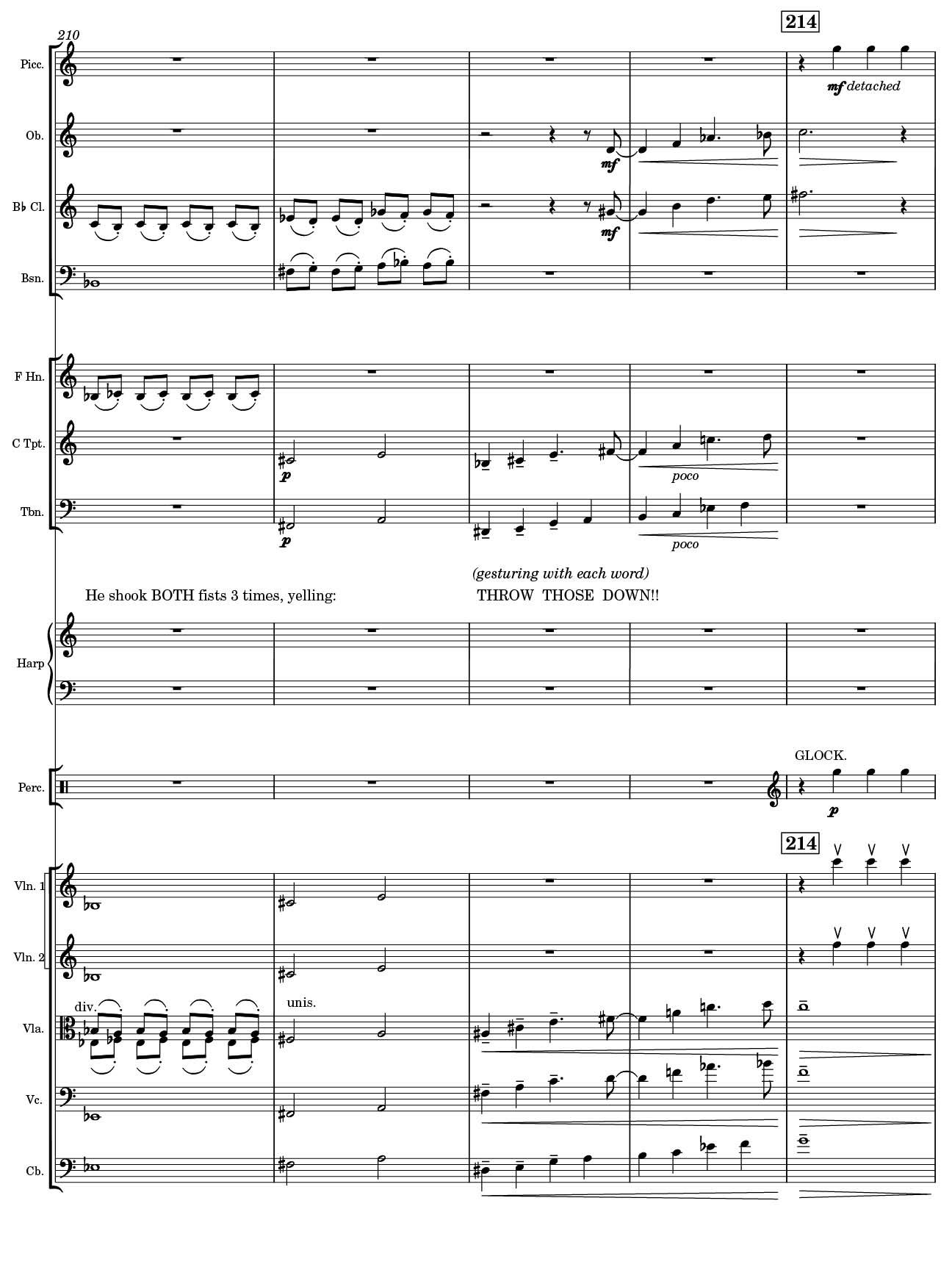
ABOUT THE STORY A TREEFUL OF MONKEYS is based on a traditional African folk tale about a hat seller who takes a nap under a tree, waking up to discover that monkeys have taken all his hats and are wearing them up in the tree. The hat seller then tries to get his hats back, forgetting that monkeys imitate the behaviors they see. My telling of the story suggests a background message about social values and positive role modeling. Other versions of this folk tale have evolved through many cultures around the world, with Esphyr Slobodkina's "Caps For Sale" being the best known to American readers. Baba Wagué Diakité's "The Hatseller and the Monkeys" has a different ending, along with an author's note about some further versions of the story. AUDIENCE PARTICIPATION At bar 176, the audience snores representing the treeful of monkeys snoring. In order to start and stop the group snore with the least interruption to the story's progress, it is recommended to rehearse the snore itself, and the starting and stopping signals, before beginning the actual performance. This should be loud and with gusto, played for laughs. CURRICULUM OBJECTIVES While self-contained as an entertaining 7-minute concert piece, A TREEFUL OF MONKEYS may also be used to demonstrate several educational objectives, when prepared in a classroom setting: (a) When the monkeys are going up the tree, and to a lesser extent before they enter, there are upward scales and arpeggios in the various instruments. When the hats come down at the very end, these scales and arpeggios are suddenly descending. (b) Other opposites are also present (especially surrounding bar 236), such as fast/slow, loud/quiet, agitated/calm. (c) Just as the hat seller's yells are often a group of three crisp syllables (for example "Throw Those Down!"), the instruments often imitate this pattern with three crisp chords or cymbal splashes. (d) Diakité's bibliography and other research yield a variety of oral traditions in retelling the folk tale. This can lead to the study of story writing and cultural histories, in conjunction with further school topics outside of music. OPTIONAL PROPS North African tellings of this folk tale refer to the hat as a tarboosh (fez) which is typically red, and therefore visible through the trees or at a distance. Using one or more red hats of any kind as a narrator's prop may add drama and humor to the performance. PREMIERE INFO The Philadelphia Orchestra's Sound All Around series Charlotte Blake Alston, narrator Samuel Caviezel, clarinet Jeffry Kirschen, horn Amy Oshiro-Morales, violin Angela Zator Nelson, percussion Lio Kuokman, piano May 2, 2015 Academy of Music, Philadelphia Percussion needed: Marimba (5-oct preferred; ossia for 4.3-oct provided with extracted part) Glockenspiel Slide Whistle |
|
|
|